

.png)


.png)


- FIND GLOVES BY HAZARD
-
FIND GLOVES BY INDUSTRY
-
Food

-
Printing

-
Engineering

-
Automotive

-
Chemical

-
Railways

-
Metallurgy

-
Healthcare

-
Packaging

-
Mechanical

-
Glass

-
Electronics

-
Utilities

-
Construction

-
Landscaping

-
DIY

-
Outdoor Sports

-
Mining

-
Airports & Ports

-
Janitorial

-
Manufacturing

-
Warehousing & Distribution

-
Clean Room

-
Pharmaceutical

-
Aerospace

-
Laboratory

-
Municipal services

-
Agriculture

-
Commercial Fishing

-
Oil and Gas

-

Ergonomics and Injury Prevention on Modern Construction Sites
Blog | 2026-10-12

Ergonomics and Injury Prevention on Modern Construction Sites
Balancing strict project deadlines with operational profitability is a daily tightrope walk for site directors and Health, Safety, and Environment (HSE) leaders in the construction industry as they face the persistent operational headache of maintaining continuous HSE compliance without crippling worker productivity. While heavy machinery, slips, trips & falls, and structural hazards often capture top-level risk assessments, field data reveals a far more pervasive and costly culprit quietly bleeding project margins.
Hand injuries and chronic musculoskeletal strains, including; lacerations, crushing injuries, and chronic fatigue do not just impact worker welfare, they directly threaten project completion timelines, inflate insurance premiums, and jeopardize contractor bidding reputations during competitive tenders. To remain competitive, construction site leaders must shift their perspective from viewing Personal Protective Equipment (PPE) as a passive compliance checkbox to treating ergonomic safety gear as an active productivity driver.
1. The Root Cause: Unpacking “Glove-in-the-Pocket” Syndrome
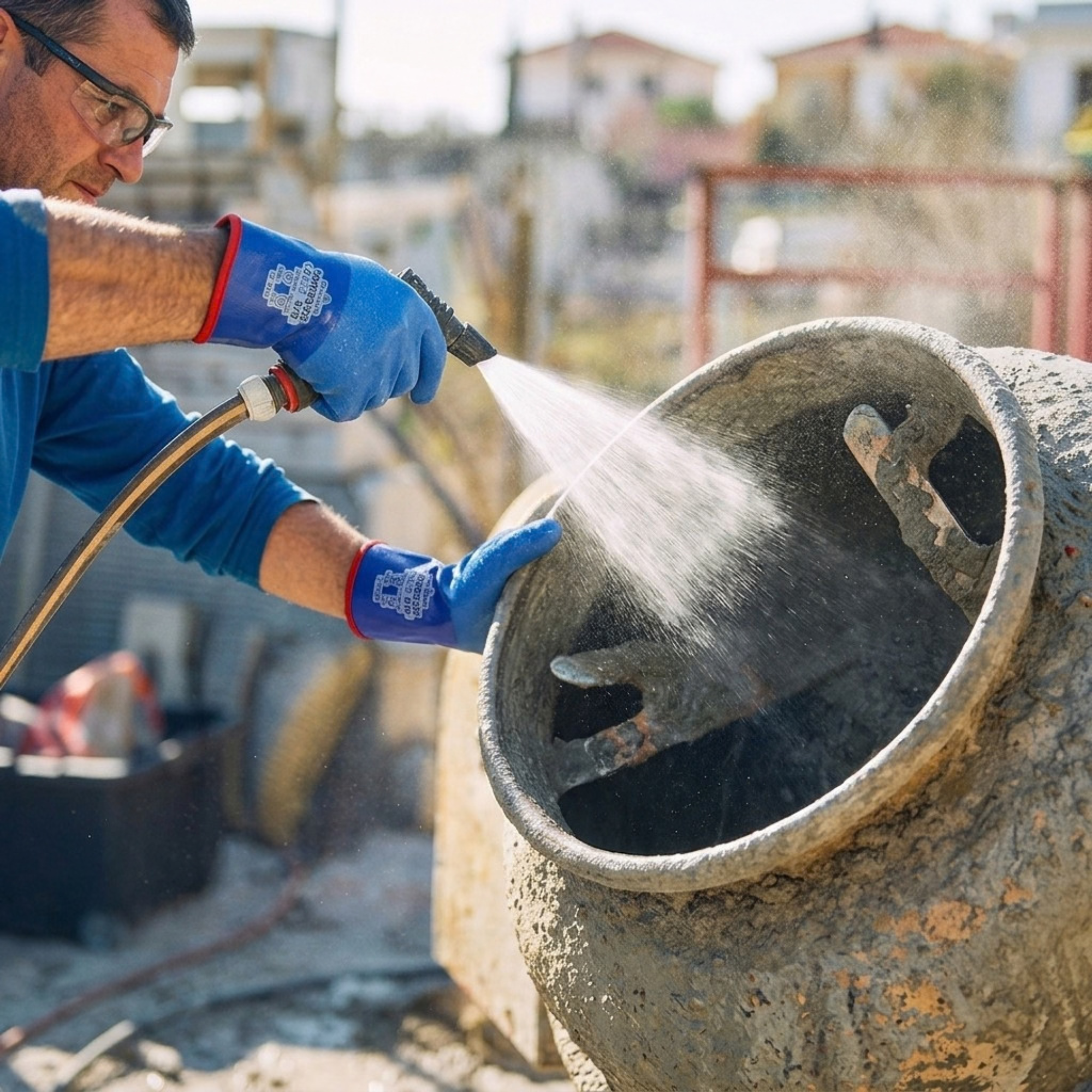
Walk onto almost any commercial job site, and you will witness a familiar, frustrating scenario: skilled trade workers handling sharp metal framing, pulling electrical wiring, or laying rebar with bare hands, while their issued safety gloves sit neatly folded in their back pockets. HSE managers frequently treat this non-compliance as a behavioral discipline issue, issuing reprimands or site warnings. However, field audits reveal that workers remove their gear out of pure operational necessity. Traditional, heavy-gauge PPE actively hinders job performance.
The “Glove-in-the-Pocket” syndrome is driven by four structural design flaws in legacy safety gear:
- Dexterity Loss: Bulky, rigid gloves destroy tactile sensitivity. When a carpenter needs to pick up fine fasteners or an electrician needs to feel wire gauges, heavy gloves make the task nearly impossible, forcing the worker to expose bare hands.
- Digital Workflow Isolation: Modern construction relies heavily on digital sign-offs, Building Information Modeling (BIM) model checking, and tablet-based site inspections. Standard gloves lack touchscreen integration, creating constant windows of exposure as trade teams pull off gloves dozens of times per shift to tap screens.
- Thermal Stress & Sweat Accumulation: Non-breathable palm coatings act as vapor barriers. Within two hours, accumulated palm sweat causes uncomfortable skin “pruning” and heat rash, leading workers to leave gloves off to dry their hands.
- Hand Fatigue & Muscle Strain: Cheap or improperly engineered cut-resistant yarns force worker hand muscles to fight against the glove’s physical stiff resistance with every flex. Over a 10-hour shift, this causes severe muscular fatigue, grip degradation, and repetitive strain injuries.
2. The True Cost: HSE Compliance vs. Commercial Margin Drain
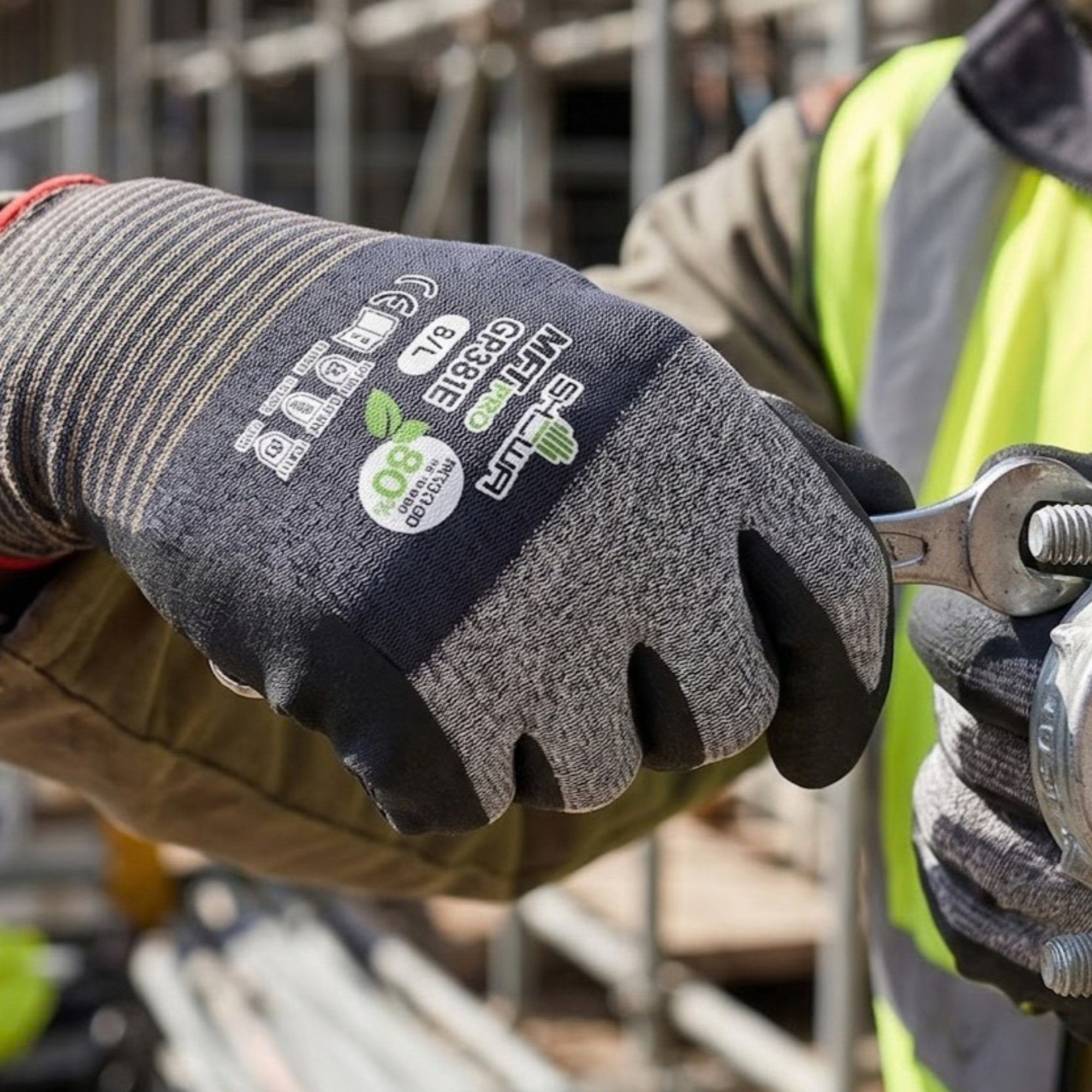
When a worker tucks away their gloves, the financial and operational fallout affects the entire corporate hierarchy:
- The HSE Perspective: Hand lacerations represent over 40% of all recordable job site incidents. Spikes in Lost Time Injury Frequency Rates (LTIFR) trigger regulatory safety audits, stop-work notices, and devastating point deductions during competitive tender bids.
- The Operational & Commercial Perspective: Losing a skilled tradesperson to a preventable hand laceration creates immediate critical path delays. Furthermore, purchasing low-cost “disposable” gloves that tear after two shifts leads to massive waste and bloated operational expenditure compared to long-lasting, micro-engineered solutions.
3. The Solution: Ergonomic, High-Compliance PPE Architecture
To keep safety gear where it belongs, on workers’ hands, construction site leaders must adopt equipment built around human-centered ergonomic principles. High-compliance PPE relies on three fundamental technical pillars:
- Ultra-Lightweight Cut Resistance: Advanced micro-engineered yarns (such as SHOWA DURACoil® or S-TEX) combine high cut defense (EN388 Level D–F) into 13-gauge, 15-gauge, or 18-gauge knits, offering maximum cut defense with bare-hand dexterity.
- Active Breathability & Moisture Management: Incorporating micro-ventilated membranes (like TEMRES®) or recycled microfiber wicking liners (such as RECYCLED MFT PRO) pulls sweat away from the palm, preventing thermal stress and skin degradation.
- Native Touchscreen Integration: Directly embedding conductive technology into palm coatings ensures workers never need to remove their gloves to interact with tablets or mobile phones.
4. Standardizing the Site: The 4-Glove Construction Matrix
Rather than managing dozens of confusing safety SKUs across various subcontractors, forward-thinking site leaders are consolidating inventory into a streamlined, task-based hand protection matrix:
| Operational Site Zone | Identified Hazard | Standardized SHOWA Solution | Key Specifications & Standards |
|---|---|---|---|
| 1. Precision Trade & Electrical | Fine hardware handling, light cut hazards. | SHOWA 234 or DURACoil Alpha XC510. | 15g/18g ultra-light HPPE, EN 388 Level D Cut Resistance, bare-hand feel. |
| 2. Heavy Structural & Rigging | Razor-sharp steel, severe crushing points. | SHOWA S-TEX Alpha XC821 or S-TEX 581 / XC832IP. | EN 388 Level E–F Cut Resistance, Hagane Coil® tech, TPR back-of-hand impact shields. |
| 3. Concrete, Mortar & Wet Chemical | Caustic wet cement, solvents, epoxies. | SHOWA CS720 | Liquid-proof nitrile, EN ISO 374 Type A chemical burn protection. |
| 4. Outdoor Winter & All-Weather Operations | Freezing rain, ice, thermal stress. | SHOWA 477, SHOWA or TEMRES 282. | Waterproof, thermal fleece lining, micro-ventilated TEMRES® membrane (EN 511) down to -50°C. |
5. Sustainable Safety: Green Building & ESG Realities
As modern construction contracts increasingly mandate strict Environmental, Social, and Governance (ESG) standards, PPE waste has come under intense scrutiny. Standard nitrile and synthetic gloves can take hundreds of years to break down in landfills. Pioneering innovations like Eco Best Technology® (EBT) enable single-use and coated nitrile gloves to achieve up to 82% biodegradation in biologically active landfills within 386 days (tested per ASTM D5511), giving safety managers a direct path to reduce Scope 3 waste without compromising mechanical performance.
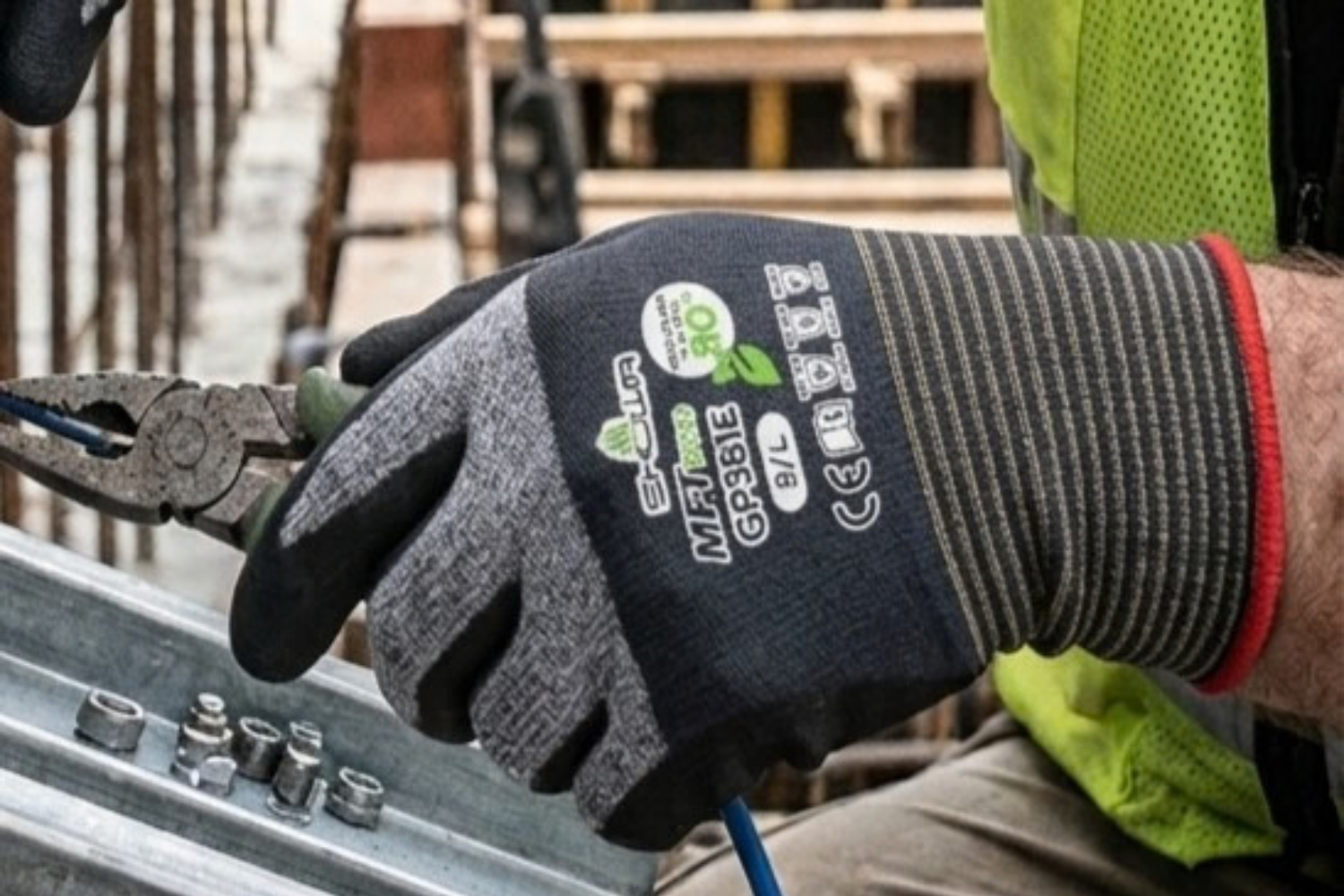
Beyond end-of-life landfill degradation, environmental stewardship in PPE manufacturing now starts at the fiber level through circular economy design. Forward-thinking contractors are actively selecting high-performance hand protection crafted from recycled materials, such as recycled PET (rPET) derived from recycled plastic bottles. Innovating in recycled fiber technology, models like the SHOWA RECYCLED MFT PRO GP381E utilize an engineered liner composed of 80% recycled materials. Delivering a direct reduction of 71.0g of CO2 emissions per pair while offering ultra-lightweight breathability and an embossed S-shape grip, it proves that carbon footprint reduction and uncompromised site ergonomics can go hand in hand.
Take the Next Step: Eliminate “Glove-in-the-Pocket” on Your Site
Fixing safety compliance, protecting worker productivity, and reducing PPE wastage does not require operational disruption or extra budget. Through the Sentinel by SHOWA program, hand protection experts partner with your site team to audit, test, and prove performance with zero financial risk.
Access the complete site-leadership toolkit:
- eGuide Download The Construction Leader’s Guide to Solving the “Glove in the Pocket” Problem
- Download Full Catalog & SKU Selector SHOWA Construction Industry Glove Series Brochure
- On-Site Sentinel Survey Request your complimentary on-site trial and hand hazard mapping.