

.png)


.png)


- FIND GLOVES BY HAZARD
-
FIND GLOVES BY INDUSTRY
-
Aerospace

-
Agriculture

-
Airports and Ports

-
Automotive

-
Chemical

-
Clean room

-
Commercial fishing

-
Construction

-
Electronics

-
DIY

-
Engineering

-
Food Compliant Gloves

-
Glass

-
Healthcare

-
Laboratory

-
Janitorial

-
Landscaping

- Packaging
-
Manufacturing

-
Mechanical

-
Metallurgy

- Mining
- Municipal services
- Pharmaceutical
- Printing
- Oil and gas
- Railways
- Utilities
- Warehousing and Distribution
-

How to Choose the Right Polymer for Chemical Protection Gloves
Blog | 2026-02-23
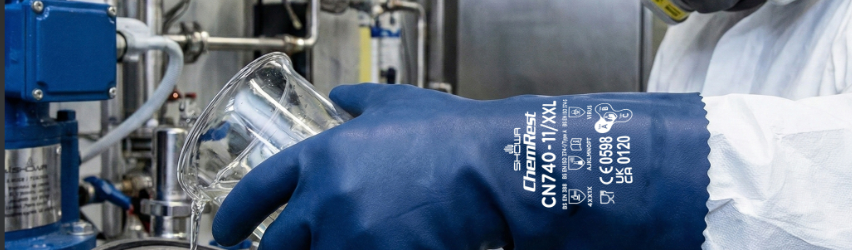
In practice, chemical hand protection is more complex. Different chemicals interact with polymers in different ways, and a glove that performs well in one application may offer limited protection in another. Some of the most serious risks are also invisible. Chemicals can pass through a glove without causing obvious damage, gradually exposing the skin and increasing the risk of long-term health effects.
Across the United States, the UK and the EU, regulations require employers to assess hazards and provide appropriate hand protection. What they do not do is prescribe a single correct glove. Making the right choice depends on understanding how chemicals interact with both the skin and the glove material.
Skin exposure and chemical risk
The skin is not an impenetrable barrier. It can absorb substances, particularly when exposure is repeated or prolonged. This is why chemical risk is not limited to obvious burns or spills.
Repeated exposure can lead to occupational skin disease (OSD), including irritant and allergic contact dermatitis. Irritant contact dermatitis results from cumulative physical damage to the skin. Allergic contact dermatitis is an immune response that develops after sensitization, meaning even small exposures can trigger reactions.
Latex sensitization is a familiar example. Natural rubber latex offers excellent elasticity and comfort, but the proteins it contains can cause allergic reactions in some individuals. Once sensitized, workers may no longer be able to wear natural rubber latex gloves safely.
Some chemicals also pose a risk through dermal absorption. Certain solvents can penetrate the skin’s lipid layer and enter the bloodstream, potentially affecting internal organs. This makes glove selection a long-term occupational health consideration, not just an immediate safety measure.
Permeation vs degradation: where gloves really fail
A common mistake in chemical glove selection is confusing degradation with permeation. These are very different failure mechanisms.
Degradation is visible. The glove may swell, soften, become brittle, change colour or begin to break down after contact with a chemical. When this happens, most users recognise that the glove has failed.
Permeation is less obvious and often more dangerous. It occurs when a chemical passes through the glove material at a molecular level without any visible holes or damage. From the outside, the glove may look perfectly fine while the chemical is migrating through the polymer and coming into contact with the skin.
This is why breakthrough time is such a critical performance measure. Breakthrough time indicates how long it takes for a chemical to be detected on the inside of a glove after contact. Under EN ISO 374-1:2016, gloves are tested against specific chemicals and assigned performance levels based on this timing.
In the United States, OSHA’s hand protection regulation (29 CFR 1910.138) requires employers to assess hazards and select appropriate gloves (permeation test according to ANSI/ISEA 105 & ASTM F739), but it does not specify glove materials. This places responsibility on employers to understand chemical-specific performance rather than relying on generic labels. A glove can look intact while chemicals pass through it. Appearance alone is not a reliable indicator of protection.
The big four polymers and what they offer
Different glove polymers behave very differently when exposed to chemicals. Understanding their strengths and limitations is essential for effective risk assessment.
Nitrile gloves
Nitrile, or Nitrile Butadiene Rubber (NBR), gloves are widely used in industrial and laboratory environments. They offer strong resistance to oils, greases, and aliphatic hydrocarbons, along with good puncture resistance and mechanical performance. Nitrile is also free from natural rubber proteins, reducing allergy risk.
However, nitrile performs poorly against certain chemicals, particularly ketones such as acetone and methyl ethyl ketone (MEK). In these environments, nitrile may allow rapid permeation despite appearing intact.
Latex gloves
Latex, or Natural Rubber Latex, is valued for its elasticity, comfort, and tactile sensitivity. It performs well with water-based solutions, weak acids, caustics, and detergents, making it suitable for many laboratory and light handling tasks.
Its limitations are significant. Latex offers poor resistance to oils, greases, and many organic solvents, and the risk of allergic sensitization must always be considered.
Neoprene gloves
Neoprene is often selected as a versatile option. It is also known as polychloroprene and offers good resistance to acids, bases and alcohols while remaining flexible and durable, making it suitable for wet or variable environments.
Neoprene also has limits. It performs poorly against chlorinated hydrocarbon solvents and may provide reduced grip when wet.
Butyl gloves
Butyl rubber, or isobutylene-isoprene rubber, is designed for high-risk chemical environments. It provides exceptional resistance to ketones, esters, alcohols and highly corrosive acids, along with very low gas and vapor permeability.
The trade-offs are reduced dexterity, limited grip, and lower mechanical resistance compared with nitrile or neoprene. In many cases, these compromises are acceptable when chemical exposure is the primary risk.
Why the chemical matters more than the glove name
‘Chemical resistant’ is a convenient label, but it hides important details. Chemical protection is not a single performance category. Exposure time, concentration, temperature, and frequency all influence how a glove performs in real conditions.
This is why safety professionals increasingly work with CAS numbers rather than generic chemical names. Both OSHA guidance in the United States and EN ISO testing frameworks in Europe emphasise chemical-specific hazard assessment. Responsibility sits with the employer to select hand protection based on the actual substances in use.
Using chemical-specific data to make better decisions
Interpreting permeation data manually is time-consuming and prone to error. Comparing glove materials without chemical-specific information often leads to assumptions that do not hold up in practice.
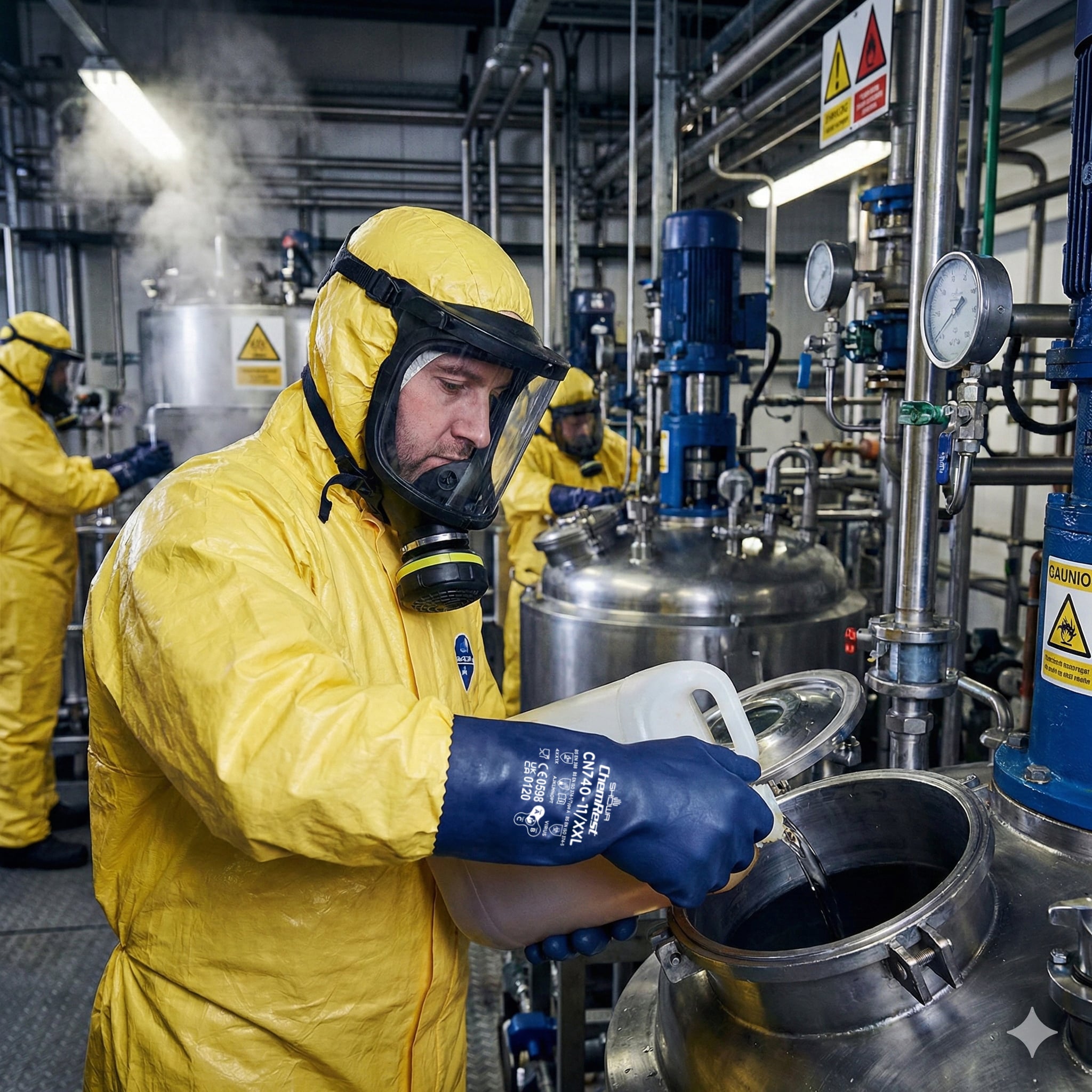
SHOWA’s ChemRest database supports informed glove selection by allowing safety professionals to evaluate chemical resistance by substance and CAS number. Users can compare polymers by breakthrough time and understand how different gloves perform under standardized test conditions.
This approach helps move PPE decisions from habit to evidence and supports compliance with OSHA 29 CFR 1910.138 and EN ISO 374-1:2016.
No single polymer is suitable for every chemical or every task. Effective hand protection depends on understanding how chemicals interact with glove materials, not just how gloves look after use.
Do not guess your employees’ skin safety. Visit SHOWA’s ChemRest database to search your chemicals by CAS number and identify the right gloves based on proven breakthrough time data.